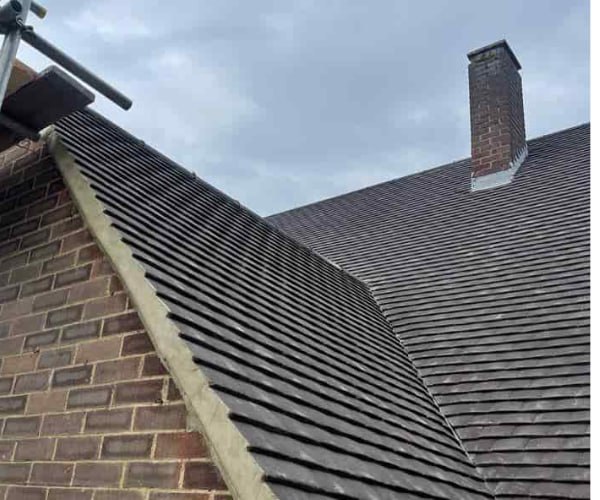
How to Identify Loose, Cracked or Missing Roof Tiles
Roof tiles form the main protective covering of a pitched roof, directing rainwater away from the property and shielding the materials beneath. When a tile becomes loose, cracked or missing, the roof may no longer provide the same level of protection.
Tile damage is not always immediately obvious. Some defects can be spotted from ground level, while others first become apparent through changes inside the loft or property. Recognising the warning signs can help homeowners arrange repairs before moisture affects a wider area.
Warning Signs of Loose, Cracked or Missing Roof Tiles
Roof tiles should usually form consistent, evenly spaced rows. Any visible interruption to this pattern may indicate movement or damage. Inspections should be made from a safe position at ground level rather than by climbing onto the roof.
Look for Uneven Tile Lines
A loose or displaced tile may sit lower than those around it, project above the roofline or appear slightly twisted. Even a small change in position can create a gap through which wind-driven rain may pass.
Pay particular attention to roof edges, ridges and areas around chimneys or roof windows. Tiles in these locations can be more exposed to wind and may move if their fixings have weakened.
An uneven line does not always mean the tile itself is damaged. It may point to a failed nail, clip or supporting batten, so the cause should be assessed as part of the repair.
Check for Visible Cracks and Broken Edges
Some cracks are easy to identify, particularly when a tile has split into separate sections. Others may appear as a fine line across the surface or a small broken corner.
A damaged tile may remain in position while allowing water to reach the underlay beneath. Repeated exposure can place additional pressure on this secondary protective layer and the timber structure below.
Changes in colour or texture may also highlight an affected tile. A newly exposed surface can appear different from the weathered face of the surrounding roof covering.
Identify Gaps in the Roof Covering
A missing tile normally leaves a clear gap in an otherwise continuous row. The material beneath may be visible, and neighbouring tiles may appear unsupported or out of alignment.
Fragments of tile found on a driveway, patio or in the garden can also indicate a breakage above. After strong winds, check the ground around the property as well as the visible roof slopes.
The absence of an obvious gap does not rule out damage. Part of a tile may have broken away while the remaining section stays attached to the roof.
Examine the Ridge and Hip Tiles
Tiles along the ridge and sloping hips help protect important roof junctions. If one becomes loose, cracked or displaced, water may gain access to the adjoining roof slopes.
From ground level, look for gaps, uneven sections or pieces of deteriorated bedding material. A ridge tile that appears raised or out of line should be assessed promptly because of its exposed position.
These tiles require the correct fixing method. Applying a surface sealant without addressing the failed fixing or bedding is unlikely to provide a dependable repair.
Watch for Internal Warning Signs
Roof tile problems may first be noticed inside the loft. Warning signs include:
- Damp marks on timbers or underlay
- Daylight visible through the roof covering
- Dark staining beneath a particular section
- Wet or compressed insulation
- Water marks that appear after rainfall
- Small amounts of debris beneath the tiles
Daylight in a loft can sometimes be visible through designed ventilation points, so it does not always confirm a missing tile. A professional inspection can distinguish between normal construction details and an opening caused by damage.
Notice Changes Inside the Property
A damaged tile can allow water to travel along underlay, battens or rafters before appearing indoors. For this reason, a ceiling stain may not sit directly beneath the defective tile.
Peeling paint, discoloured plaster, musty odours or damp marks near an external wall can all suggest that moisture is entering from above. These symptoms should be investigated rather than covered over, as the source may continue to deteriorate.
Consider Recent Weather Conditions
Strong winds can lift tiles when fixings are worn or edges are already exposed. Heavy rain may then reveal the defect through water ingress. Frost can also worsen existing cracks as trapped moisture freezes and expands.
After severe weather in Pontefract, West Yorkshire, a visual check from ground level can help identify newly disturbed sections. Binoculars or a clear photograph taken from a safe position may make changes easier to see.
Why Professional Inspection Is Important
A visible tile defect may be only part of the problem. The condition of the fixing, batten, underlay and neighbouring tiles should also be checked. Simply pushing a slipped tile back into place may not secure it or prevent further movement.
CNB Roofing Pontefract can assess the roof covering systematically and determine whether the problem is limited to an individual tile or connected to wider deterioration. A suitable repair can then reinstate the affected materials and restore reliable weather protection.
Homeowners should avoid walking on the roof. Tiles can be fragile, and the underlying condition cannot always be judged from above without appropriate access and experience.
Conclusion
Loose, cracked or missing roof tiles can often be identified through uneven rows, visible gaps, broken edges, debris on the ground or signs of moisture inside the loft. Even minor movement can expose the roof to rain and allow surrounding materials to deteriorate.
If you notice any of these warning signs at your property in Pontefract, West Yorkshire, contact CNB Roofing Pontefract to arrange a professional assessment. Prompt attention can help keep a localised tile defect from developing into more extensive roof damage.
Call us on: 01977 805 558
Click here to find out more about CNB Roofing Pontefract
Click here to complete our contact form and see how we can help with your roofing needs.