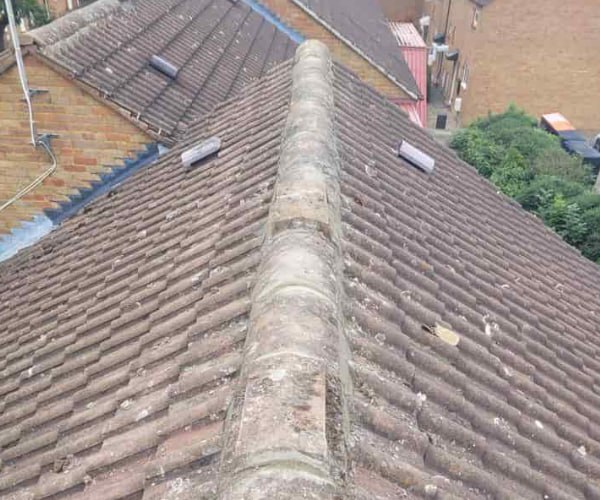
How Does a Small Roofing Defect Turn Into Persistent Water Ingress?
A small roofing defect may not produce an obvious leak immediately. A narrow crack, slightly displaced tile or small opening in a roof junction might only admit water during certain weather conditions. However, repeated exposure can gradually enlarge the weakness and allow moisture to spread beneath the visible covering.
Persistent water ingress develops when the original entry point remains unresolved and the materials around it begin to deteriorate. Understanding this progression explains why even minor roofing defects deserve proper investigation.
How Minor Roof Damage Develops Into an Ongoing Leak
A roof works as a complete system. Tiles, slates, underlay, battens, flashing, valleys and drainage components must all direct water away effectively. A defect in one component can place additional pressure on the others.
A Small Opening Interrupts the Roof’s Weather Protection
Pitched roof coverings rely on precise alignment and overlap. If a tile slips slightly or a slate develops a crack, water may reach the layers beneath rather than travelling safely down the roof.
The opening does not need to be large. Wind-driven rain can enter narrow gaps, particularly around exposed edges, valleys, ridges and junctions. Once moisture reaches the underlay, it may travel before finding a route into the property.
Repeated Rainfall Enlarges the Weakness
An initial defect may only allow a small amount of moisture through. Repeated wetting, drying and temperature changes can then place stress on the surrounding materials.
Loose fixings may weaken further, cracks can expand and edges may lift. A defect that once leaked only during severe weather can eventually admit water during ordinary rainfall.
Water Travels Away From the Entry Point
The damp patch inside a building is not always directly below the external damage. Water can run along underlay, battens, rafters and other structural elements before reaching a ceiling or wall.
This movement can make the leak appear inconsistent. Different wind directions and rainfall intensities may alter the route, causing staining to appear in more than one place. Accurate leak detection is therefore more reliable than repairing the roof immediately above the visible mark.
Underlay Can Conceal the Problem Temporarily
Roofing underlay provides secondary protection beneath tiles or slates. It may catch a limited amount of water and guide it towards the eaves, delaying visible signs inside the property.
However, underlay can deteriorate, tear or sag after repeated exposure. Once it can no longer manage the moisture, water may begin reaching insulation, timbers and ceilings. What appears to be a sudden leak may therefore have been developing for some time.
Damp Materials Take Longer to Dry
Persistent ingress does not necessarily mean that water is entering continuously. Materials beneath the roof can absorb and retain moisture, remaining damp between periods of rainfall.
Insulation may hold water, while timber and plaster can dry slowly. As a result, internal marks can continue to spread even after the weather improves. Continued dampness also makes it difficult to judge whether a superficial repair has actually stopped the leak.
Damaged Flashing Creates a Recurring Entry Point
Lead flashing protects roof junctions around chimneys, walls and changes in level. A small split, lifted edge or gap can repeatedly direct water behind the covering.
These defects are often sensitive to wind direction. The roof may remain dry during one period of rain but leak during another, creating the impression of an unpredictable problem. Repairing the junction correctly is essential to prevent recurrence.
Valleys Can Concentrate Water Around Minor Defects
Roof valleys carry water from adjoining slopes, so even a small weakness can be exposed to a considerable volume of rainfall. Cracks, gaps, displaced materials and debris may prevent the valley from draining properly.
Water can then spread beneath tiles on either side. Because the affected area may be wider than the visible defect, the complete valley and its adjoining coverings should be assessed.
Blocked Drainage Keeps the Roof Wet
Blocked gutters, outlets and downpipes can cause water to back up around roof edges. On flat roofs, obstructed drainage may result in standing water over seams, joints or worn areas.
Prolonged contact gives moisture more opportunity to exploit small defects. Clearing the blockage is important, but any damage caused by repeated saturation must also be examined.
Temporary Surface Repairs May Hide the Cause
Applying sealant or patching the most visible gap can sometimes mask a defect without correcting its underlying cause. If a fixing has failed, a batten has deteriorated or water is entering further up the roof, the leak is likely to return.
A successful repair should address:
- The actual entry point
- The route taken by the water
- The condition of nearby coverings
- The underlay and battens
- Flashing and roof junctions
- Drainage around the affected area
- Any moisture damage beneath the surface
This broader assessment helps prevent repeated repairs to the wrong location.
Persistent Moisture Can Spread the Damage
Once water penetrates the roof covering, it may affect a growing area. Damp underlay can deteriorate, battens may weaken and insulation can lose effectiveness. Internal ceilings and decorative finishes may also become stained or damaged.
The original defect may still be relatively small, but the consequences become more extensive the longer moisture is allowed to enter.
Early Inspection Supports a Targeted Repair
Prompt investigation gives a roofing contractor the best opportunity to identify the problem while it remains contained. The inspection should consider the roof surface, vulnerable junctions and accessible internal areas together.
This evidence allows the repair to address the source rather than only the visible symptoms. It also helps establish whether the defect is isolated or connected to wider deterioration.
Conclusion
A small roofing defect becomes persistent water ingress when repeated rainfall enlarges the weakness, overwhelms secondary protection and allows moisture to travel through the roof structure. The internal damp patch may be far from the actual entry point, which is why accurate inspection is so important.
CNB Roofing Pontefract provides professional roof inspections and repairs in Pontefract, West Yorkshire. If you have noticed recurring dampness or a leak that returns during rainfall, contact the team to arrange an assessment and identify the underlying cause.
Call us on: 01977 805 558
Click here to find out more about CNB Roofing Pontefract
Click here to complete our contact form and see how we can help with your roofing needs.